




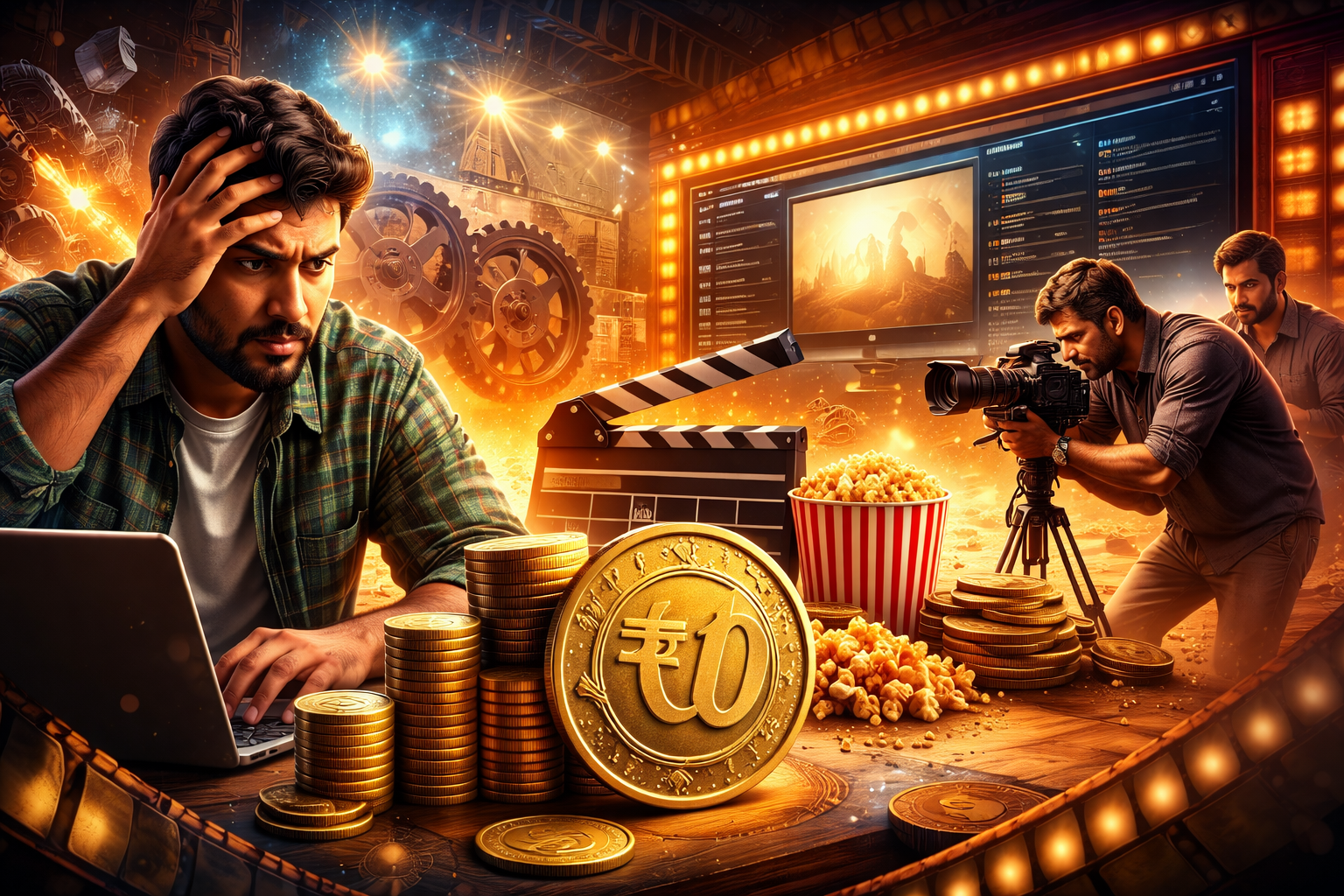
Cinema is not just entertainment; it is a collection of dreams. It is a living piece of art shaped by a director’s vision, the hard work of actors, and the relentless efforts of an entire technical team. But in today’s digital era, especially with the rapid growth of OTT platforms, the value being assigned to Kannada films raises a serious concern—has art itself lost its worth? Films that once echoed with applause in packed theatres are now quietly fading away on mobile screens. Behind this silence lies a harsh reality: a full movie watch on OTT is earning filmmakers as little as ₹10.
It may sound unbelievable, but the film Theertharoopa Tandeyavarige stands as a clear example of this situation. The movie, which received appreciation from critics and connected emotionally with audiences, is the brainchild of director Ramenahalli Jagannath and produced under Jai Chamundeshwari Productions. Featuring performances by Nihar Mukesh and Rachana Inder, the film had a successful theatrical run before making its way to Amazon Prime Video. Normally, one would expect OTT platforms to acquire such films for a decent price. However, in this case, the story took a completely different turn.
Instead of purchasing the film outright, the OTT platform opted for a “view-based payment” model. In this system, earnings depend entirely on how much the film is watched. For every hour viewed, the team earns just ₹4. Since the film runs for about 2 hours and 30 minutes, a complete watch fetches the makers only ₹10. This is not just shocking—it is deeply concerning. Even if an entire family watches the film together on a single account, the revenue remains the same ₹10.
When compared to the theatrical model, the contrast becomes even more striking. A single movie ticket costs at least ₹200, and after deductions like taxes and shares, roughly ₹100 reaches the filmmakers. This means even one viewer contributes significantly to the film’s earnings. But on OTT, even multiple viewers watching together generate only a fraction of that amount. This is not merely a financial issue; it is a question of how we value art and creativity.
This is not just the story of one film—it reflects the reality faced by many small and medium-budget Kannada films today. While big-budget movies with star power, heavy promotions, and glamour receive premium deals on OTT platforms, smaller films driven by strong storytelling and experimentation are often neglected. This imbalance threatens the very foundation of the film industry.
If this trend continues, it could discourage new filmmakers, unique narratives, and experimental cinema. When creators do not receive fair returns for their efforts, they may hesitate to take creative risks again. Over time, this could lead to a repetitive cycle of similar stories, limiting the diversity and richness of cinema.
OTT platforms have undoubtedly brought convenience and accessibility to audiences, but they must also ensure fairness for creators. While view-based models may work in some cases, the compensation needs to be reasonable and respectful of the effort involved. Otherwise, it risks devaluing the hard work of artists and technicians.
At the same time, audiences also play a crucial role in shaping the future of cinema. The kind of films we choose to watch and support directly influences what gets made next. Watching a meaningful Kannada film on OTT is not just entertainment—it is also a way of supporting the creators behind it.
This situation ultimately raises an important question: do we see films merely as a way to pass time, or do we value them as reflections of our culture and artistic expression?
In the end, Kannada cinema is not just an industry—it is an emotion. And that emotion deserves the right value. It is time for OTT platforms, filmmakers, and audiences to come together and find a balanced solution. Otherwise, the future may be dominated by big-budget spectacles, while smaller, meaningful films quietly disappear into the shadows
